
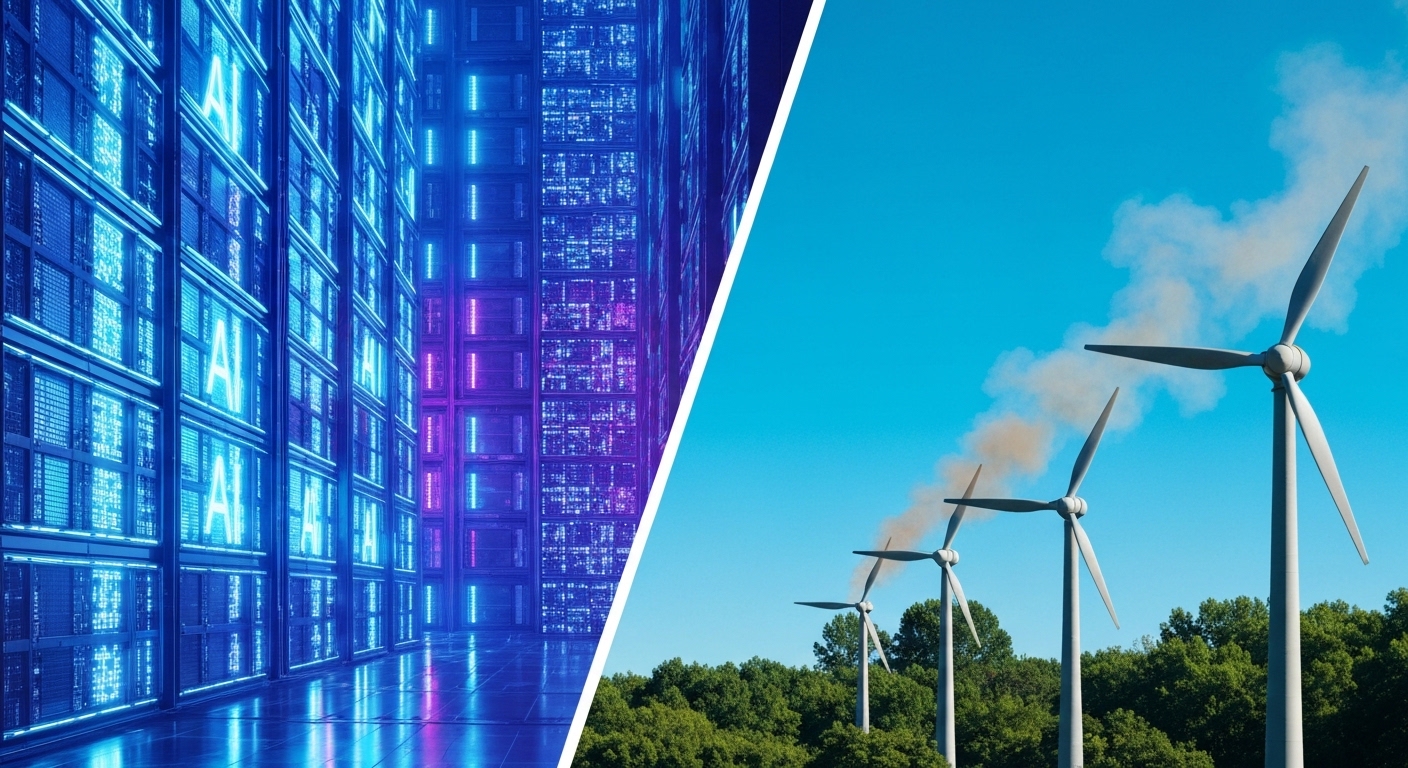
Rumors that the DOJ is prioritizing AI data centers over environmental regulations have sparked debate. We examine the actual legal tension between artificial intelligence infrastructure, gas turbines, and federal emissions laws.
A headline burning through tech forums suggests the Department of Justice (DOJ) has effectively decided that powering AI models like Grok takes precedence over clean air.
You won’t find a memo that bluntly worded in the federal archives. But the underlying debate—which recently gained traction on Reddit—highlights a rapidly escalating collision in American infrastructure. As artificial intelligence models scale, their immense energy demands are pushing grid capacities to the brink, forcing a confrontation between alleged national security priorities and bedrock environmental laws.
The Data Center Power Crisis
Training large language models requires staggering amounts of electricity. To meet this demand, tech companies are looking beyond the overburdened public grid, proposing dedicated onsite power solutions, including natural gas turbines.
This is where Silicon Valley ambition hits a regulatory wall. Building fossil-fuel-powered energy sources to keep server farms online triggers intense federal scrutiny. The tech sector’s counter-argument frequently leverages national security: maintaining a global edge in AI requires massive, uninterrupted power generation.
What the Law Actually Says
Despite arguments framing AI as a critical national security imperative, federal environmental statutes lack automatic exemptions for server farms.
The primary hurdle for dedicated power generation is the Clean Air Act. Enforced by the Environmental Protection Agency (EPA), this comprehensive law strictly regulates air emissions from stationary sources. If a company wants to spin up a fleet of gas turbines to power a new AI cluster, it must navigate the EPA’s stringent permitting processes designed to cap industrial pollution.
The Role of the DOJ
Sensational headlines imply the DOJ is actively choosing AI over the environment. The reality of federal enforcement is vastly more procedural.
The DOJ acts as the government’s litigator. A review of official DOJ document repositories governing environmental litigation shows its mandate is to defend federal agencies and enforce statutory laws as written by Congress. The DOJ does not unilaterally rewrite or ignore environmental legislation to favor a specific technology. If the EPA regulates or denies a permit for a data center’s gas turbine under the Clean Air Act, the DOJ’s role is to defend that statutory authority in court.
The digital economy’s physical footprint has collided with legal reality. The tension between the computational hunger of the AI arms race and federal environmental protection won’t be resolved by hyperbolic headlines. Instead, it will be hammered out in EPA permitting offices, courtrooms, and Congress. Until legislative frameworks shift, AI developers must innovate within the strict boundaries of existing environmental law.