
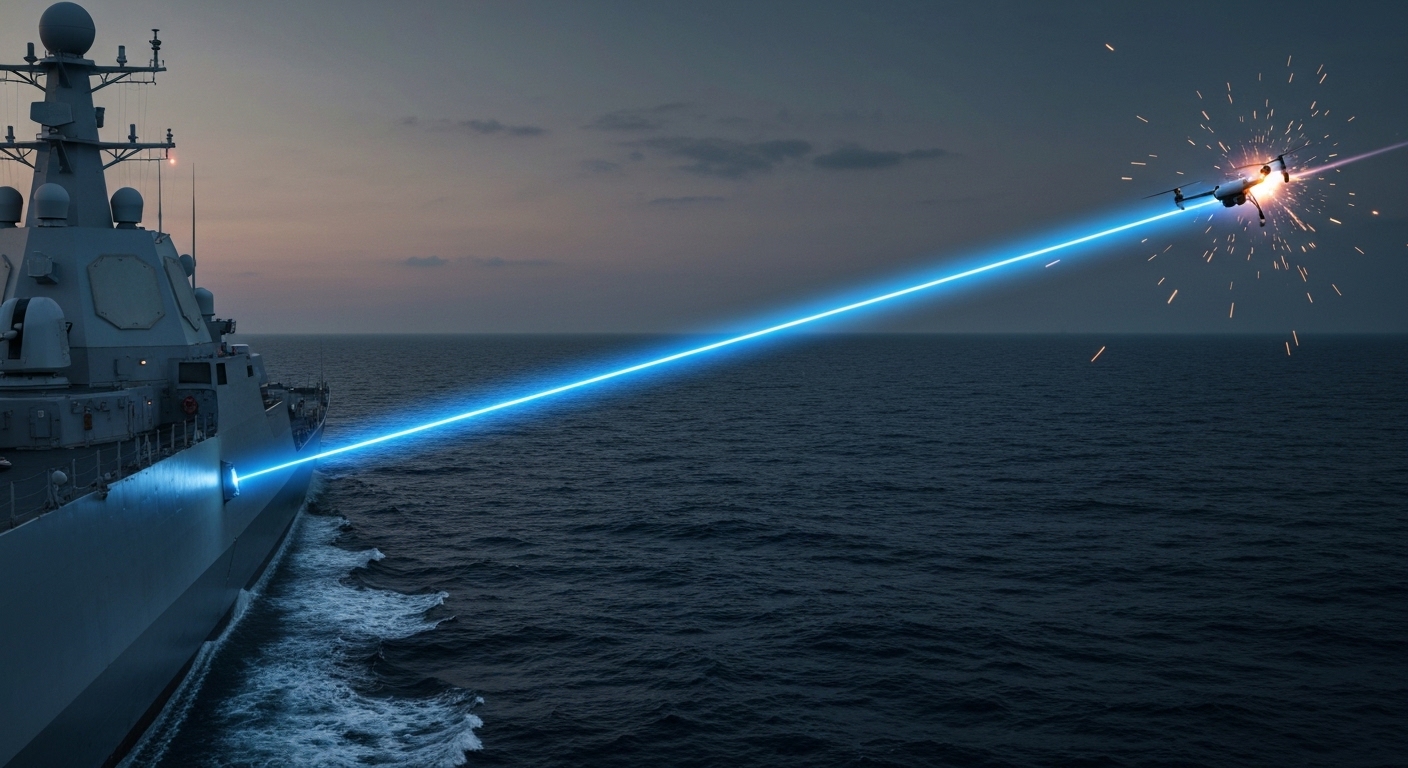
Forget multi-million dollar missiles. The UK’s new DragonFire laser can take down high-speed drones for less than the price of a fancy lunch. Here’s why it’s set to revolutionize naval defense by 2027.
Welcome to the Future of Defense
For decades, science fiction promised us sleek, high-energy laser weapons that slice through targets with surgical precision. While cinema made it look effortless, turning those beams into reality has been a logistical marathon—until now. The UK Ministry of Defence has officially confirmed a monumental leap forward: the DragonFire Laser Directed Energy Weapon (LDEW) system, which is slated to be integrated onto Royal Navy destroyers by 2027.
The $13 Shot That Changes Everything
Let’s address the fiscal reality: modern naval warfare is notoriously expensive, often relying on interceptor missiles that cost millions of dollars each. DragonFire flips that economic model on its head.
During rigorous testing at the Hebrides Range, the system demonstrated an uncanny ability to track and neutralize high-speed drones with extreme accuracy. The kicker? The energy cost per shot is estimated at approximately £10—roughly $13. This isn’t just a cost-saving curiosity; it is a strategic paradigm shift that renders drone swarms—previously a significant headache for naval commanders—far more manageable and affordable to counter.
Precision Meets Power
The DragonFire system is a high-precision tool designed for the modern battlefield. By focusing an intense beam of light, it can engage small, fast-moving aerial targets—some clocked at 400mph—at ranges previously thought unattainable for directed energy.
As detailed in the official deployment roadmap, the engineering hurdle wasn’t merely generating the power; it was the sophisticated tracking capability required to keep a laser locked onto a small, maneuvering target long enough to cause critical structural failure.
What This Means for 2027
The Royal Navy’s official announcement sets a firm timeline: 2027 marks the transition from controlled testing to active service on the high seas.
While we aren’t quite at the level of space-faring starships, the move toward directed energy provides three massive advantages:
* Virtually Infinite Magazine: As long as there is power, there is ammunition.
* Drastically Reduced Cost: Eliminating the need for expensive, limited-stock missile interceptors.
* Speed-of-Light Interception: When your defense travels at 186,000 miles per second, the advantage shifts heavily in favor of the defender.
The era of the “drone-killing laser” has arrived, and it is proving to be a much brighter, more efficient, and cost-effective future for naval security.